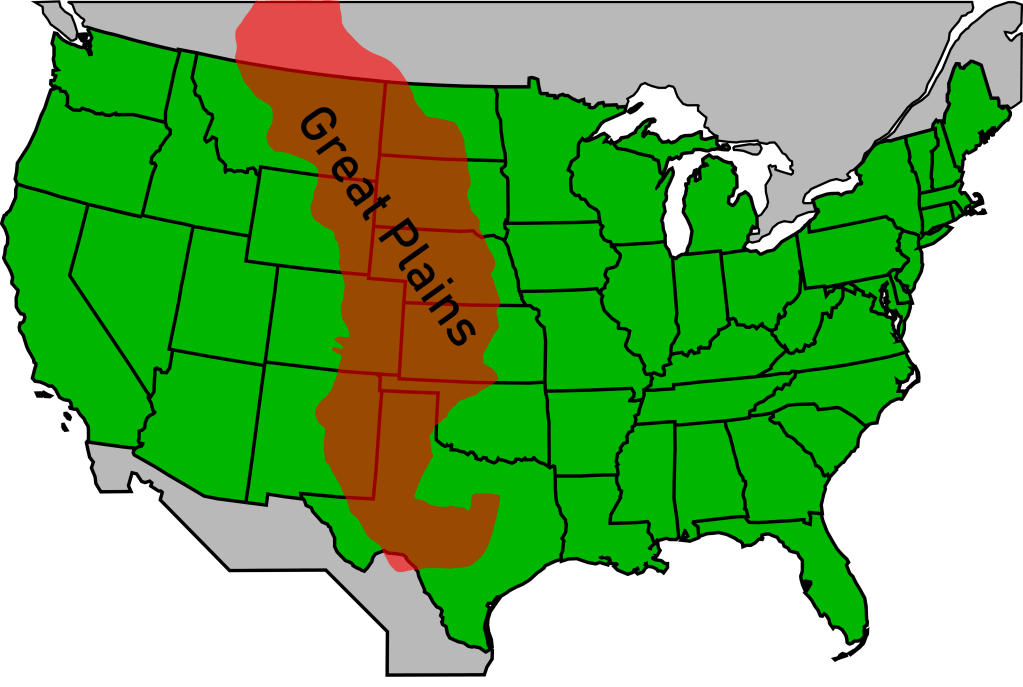
The Great Plains is a vast grassland in Central America, reaching from the Rocky Mountains in the west to the Mississipi in the east. This is the traditional home of Plains Indians, who were tribes belonging to six different Indian language families. Some of the most well known are:
• Sioux
• Crow
• Osage
• Blackfoot
• Arapaho
• Cree
• Cheyenne
Map of the Great Plains
This is where the Great Plains are.
Native American Clothing
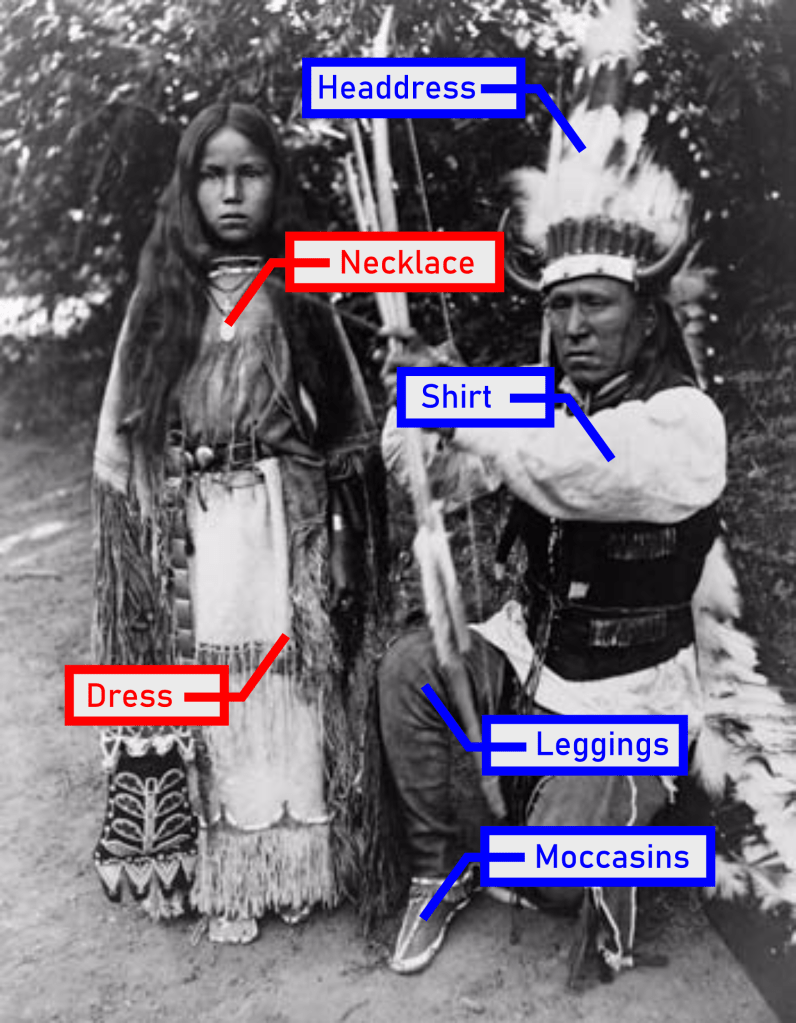
Headdress: Warriors wore headdresses made with eagle feathers for special occasions. They also wore fur hats.
Shirt & Leggings: These were made from the hides of bison, deer and antelope, which was first “tanned” to turn it into durable leather. They were hand-sewn and could be decorated with porcupine quill embroidery and fringes.
Moccasins: Moccasins were soft leather shoes made from animal skin.
Dress: Women usually wore long, buckskin dresses with leggings underneath. The dresses could be decorated with feathers, animal fur and porcupine quills.
Necklace: Many people liked to add decoration to their outfits. After Europeans arrived, many Native Americans used glass beads for jewelery.
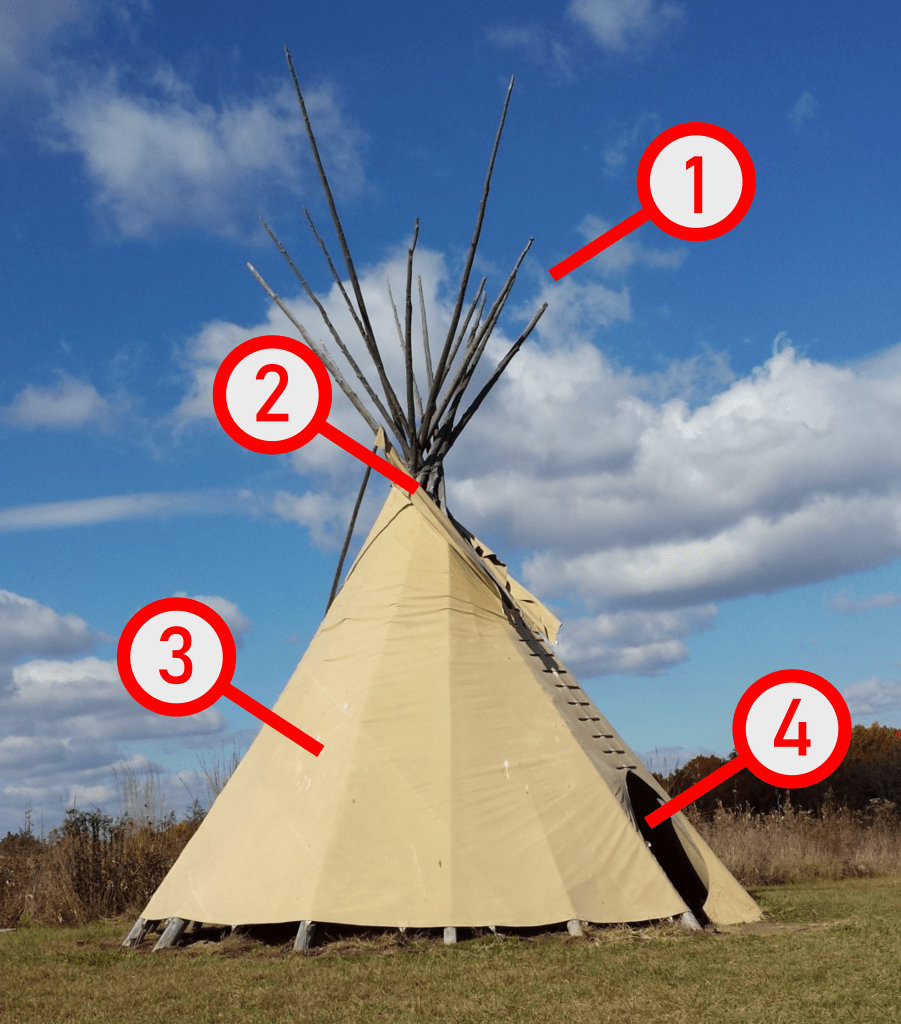
Native American Teepee
Many Native Americans lived in tipis, or teepees. They were portable tents that could easily be disassembled and transported, ideal for many nomadic Native Americans. They would travel to keep up with the bison, and took their teepees with them. Teepees could be large enough to hold several families, and were often decorated and painted to show tribal achievements in war.
- These are the support poles that define the general shape of the teepee. They were about 4.6 m (15 ft) long.
- There is a hole in the top for smoke.
- The main material was buffalo hide, which was sewn together and streched over the main framework of wooden poles.
- This is the doorway, which was a flap made out of hide.
The Buffalo
The buffalo was an essential animal to the Native Americans. They used every part of it for something, from cups to clothes. They followed their migration accross the plains. But most importantly, they wasted nothing. This diagram shows what every part of the buffalo was used for.
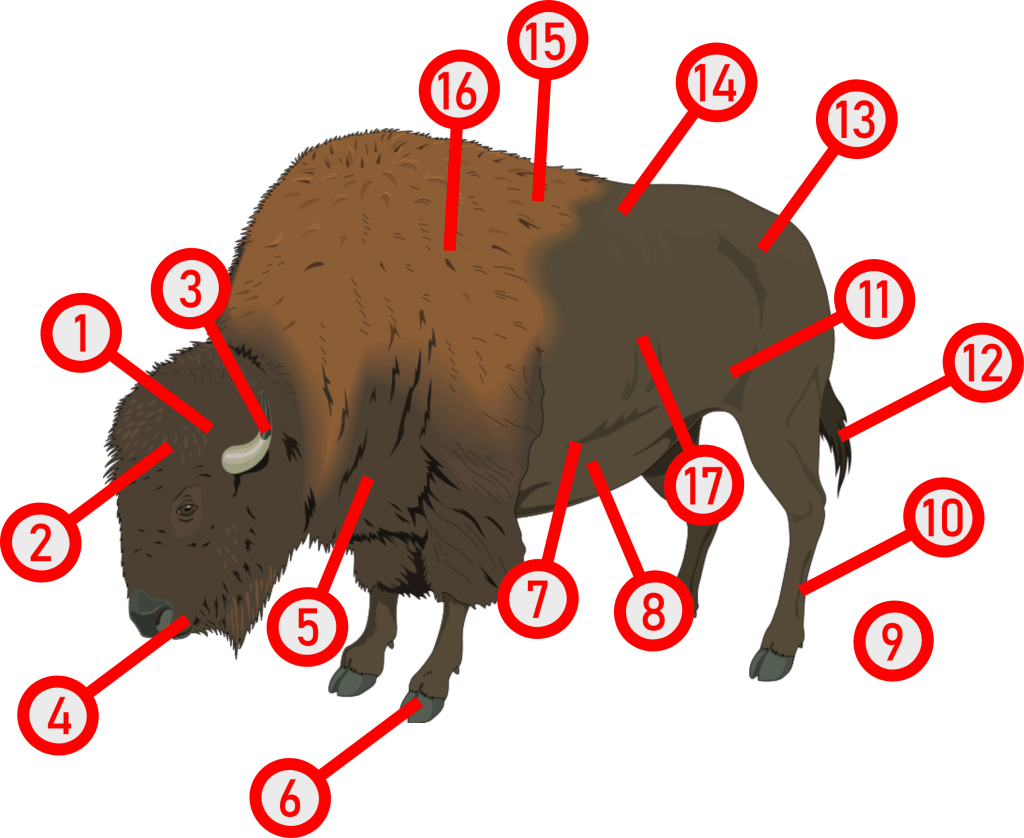
| 1. Skull | The skull was often used in religious ceremonies. |
| 2. Brain | The brain was used for tanning the hides. |
| 3. Horns | These were used for arrow-straightners, cups, spoons and toys. |
| 4. Tongue | This was used as a hairbrush, and eaten as a delicacy. |
| 5. Heart | The heart was cut out and left on the ground – the buffalo was sacred and this showed that. It could also be eaten to give a man the power of the buffalo. |
| 6. Hooves | These were used to make glue and tools. |
| 7. Intestines | These were used for making buckets and cooking pots. |
| 8. Gall | This was used for yellow paint, and was sometimes eaten raw as a delicacy. |
| 9. Dung | This was used for fuel, and smoked in a pipe on special occasions. |
| 10. Sinews | The sinews were used for bow strings and thread. |
| 11. Bladder | This was used for food bags. |
| 12. Tail | The tail was used for fly swatters, ornaments and whips. |
| 13. Rawhide | This was used for many things, including belts, containers, horse harnesses and more. |
| 14. Tanned Hide | Tanned hide was also used for many things, including bags, blankets, clothes and more. |
| 15. Fur | The fur was used for decoration, sewing and rope making. |
| 16. Fat | This was used for cooking, soap making and hair grease. |
| 17. Bones | These were used for dice, arrowheads, jewellery, knives, painbrushes and more. |
 Leo T
Leo T 